
Identify
What do mouse droppings look like?
Mouse droppings look like small dark grains of rice, about 1/8 to 1/4 inch long, with pointed ends. They usually sit along a wall, inside a drawer, or behind a stove.
A house mouse leaves them as it walks, so they show up in a line, not a neat pile. Do not sweep them dry.
Key takeaways
- Rice-grain pellets, 1/8 to 1/4 inch, pointed ends, along a wall or in a drawer.
- One house mouse leaves about 50 to 75 pellets a day, so a short line is already more than one night of walking.
- Blunt capsules closer to a jelly bean are rat pellets. Compare the two photos on this page.
- Pepper specks that smear in a cabinet track are roach droppings, not mouse pellets.
- Spray until wet, wait five minutes, then wipe. Do not sweep or vacuum them dry.
Rice grains along the wall
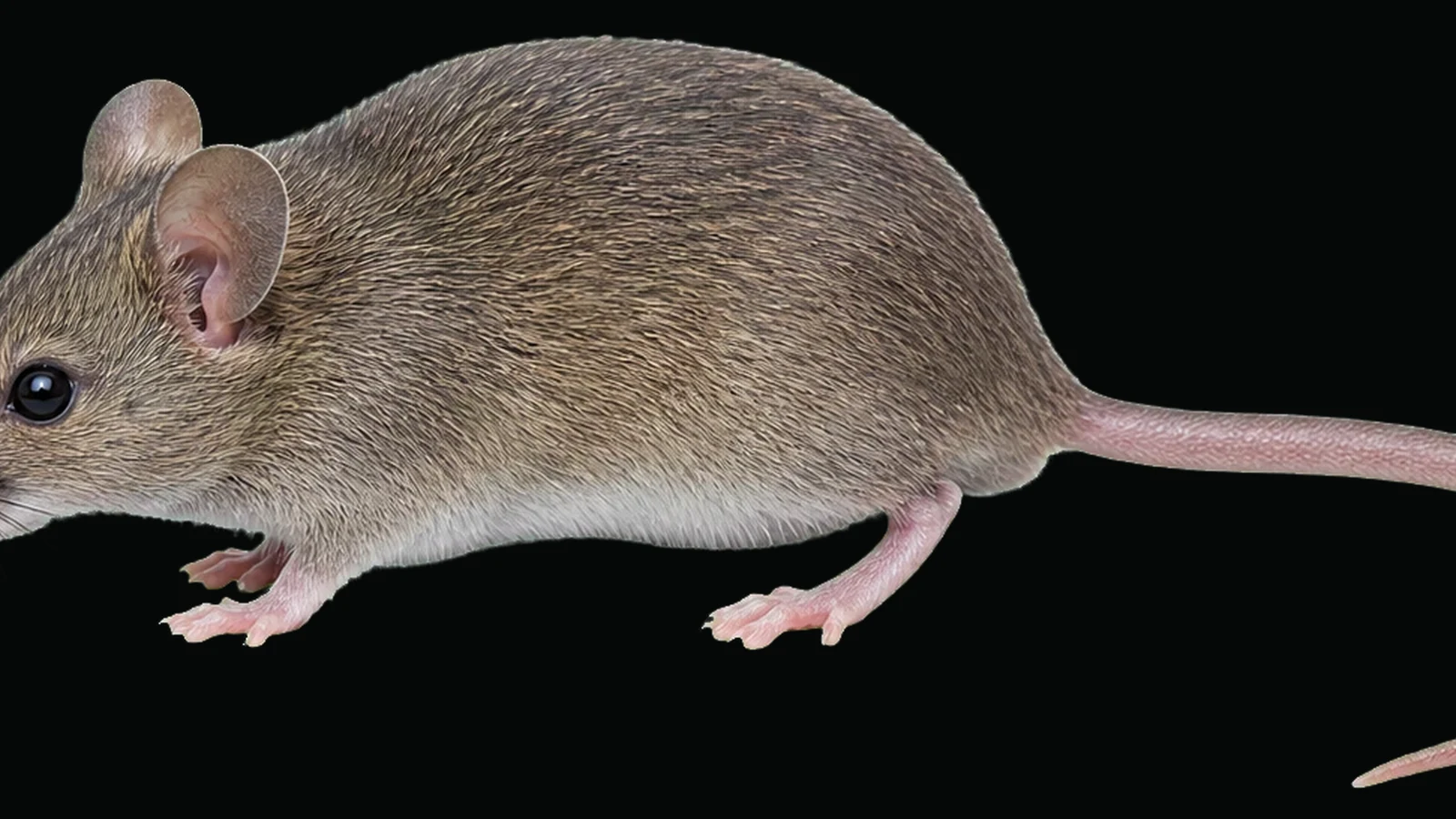 NoToPests
Fresh pellets are dark and a little shiny. Older ones fade and crumble. Pointed ends. About 1/8 to 1/4 inch. Smooth sides, not ridged.
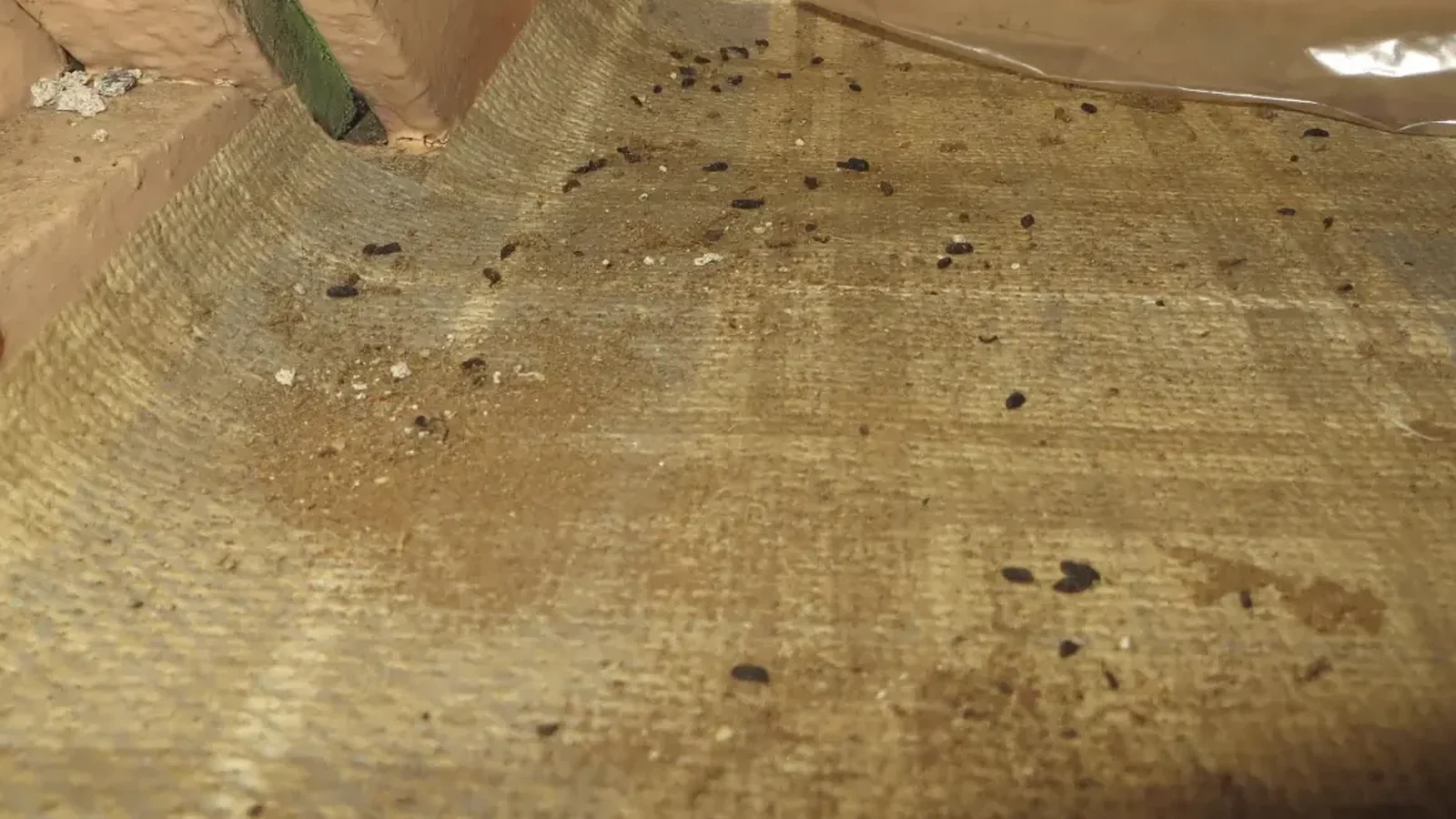 Cornell
Nebraska Extension says a house mouse leaves about 50 to 75 pellets a day as it walks. Mice keep their whiskers on the wall at night. Follow the edge.
Look here first:
- The back of a kitchen drawer and the pantry shelf
- The gap behind the stove or fridge
- Along a baseboard, not the middle of the room
- A garage bag of pet food or bird seed
- Attic insulation along a joist
A couple of pellets in a grocery bag can be a hitchhiker. A fresh line along the same wall the next morning is a house mouse still using the route.
Follow that line to a hole. Nebraska puts a mouse entry at about 3/8 inch. Gnaw on a cereal box sits on the same path.
Mouse, rat, or pepper
Hold this page next to what you found. You do not need another tab to make the first call.
NoToPests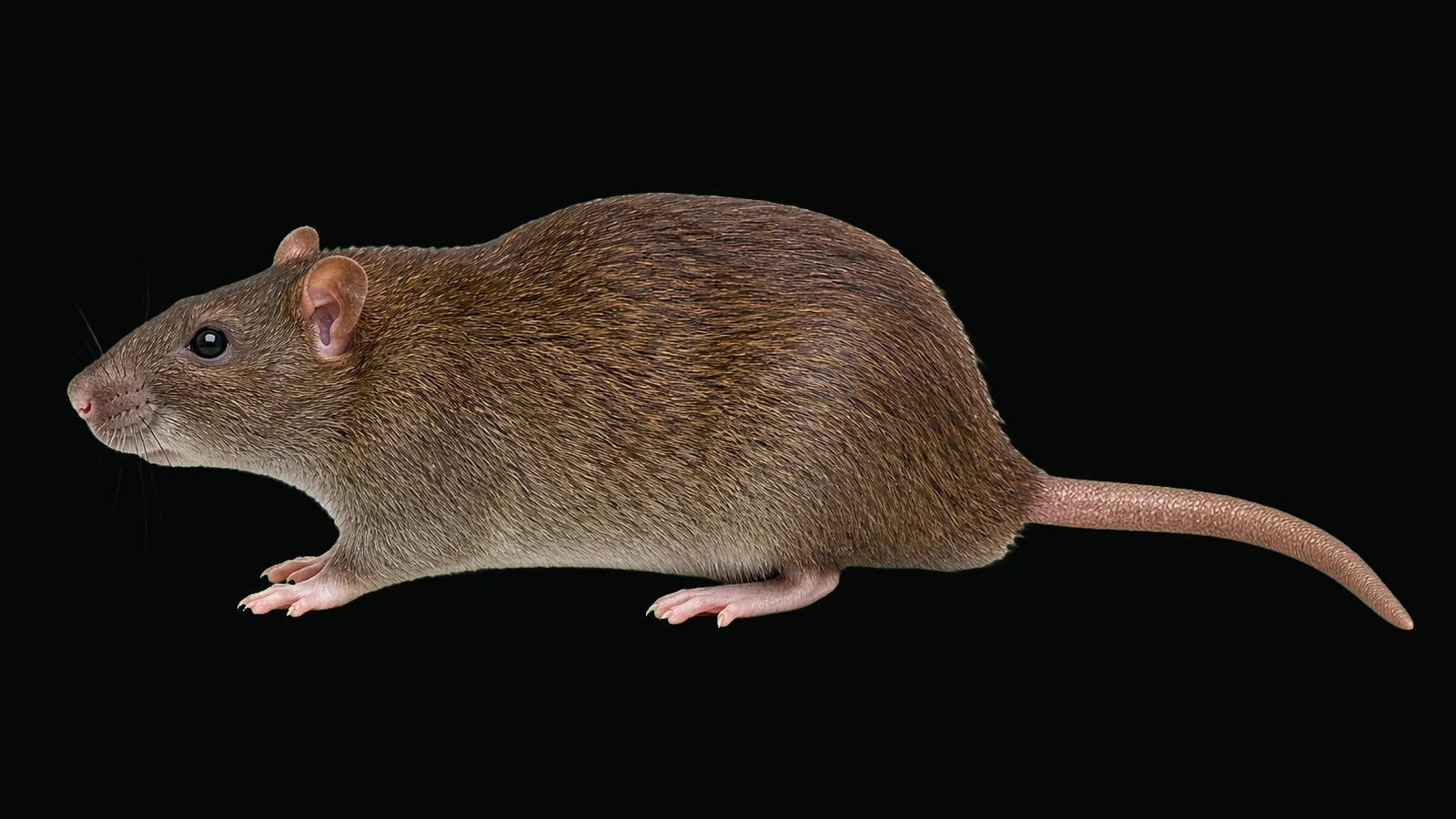 NoToPestsCornell
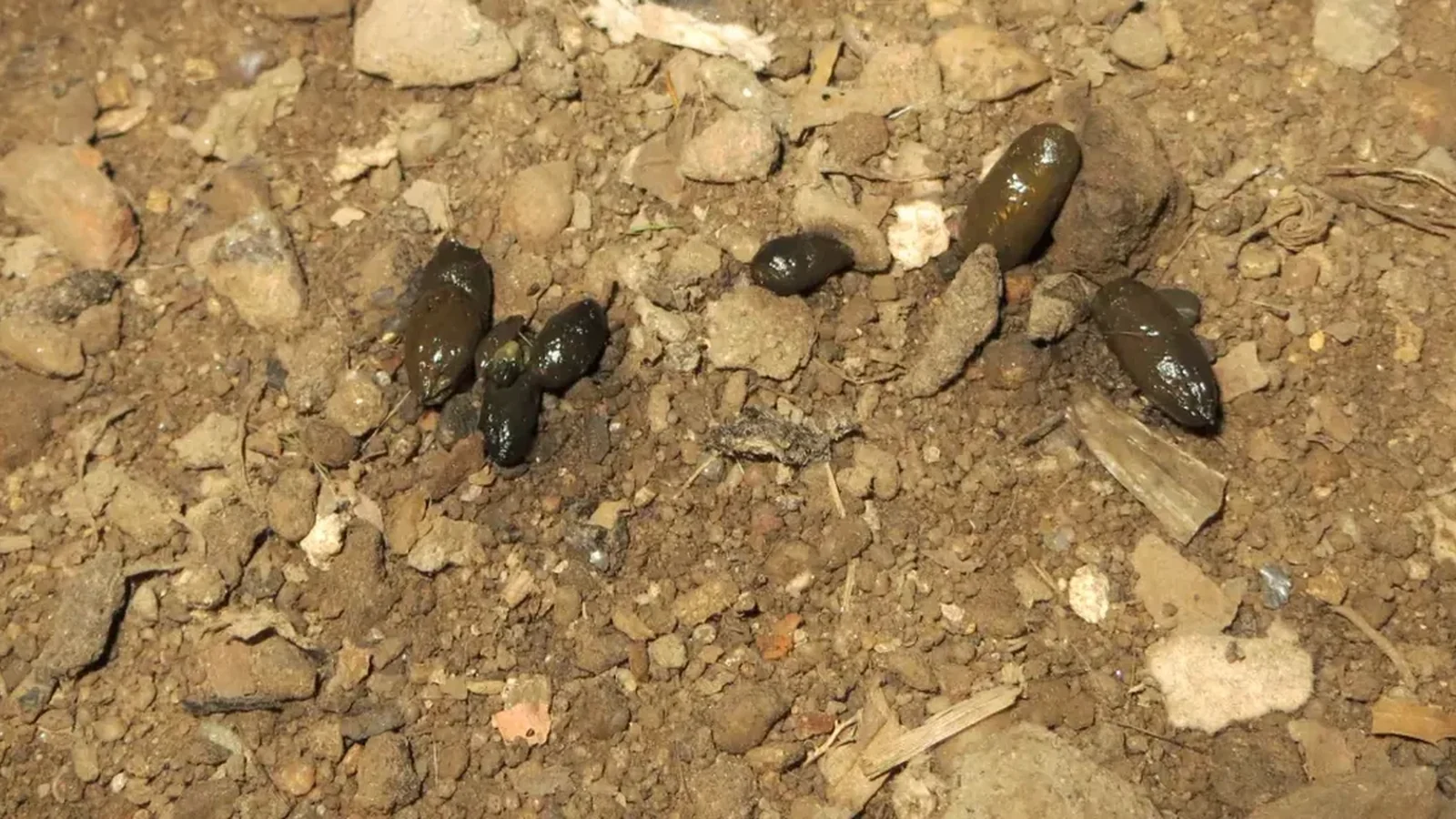 Cornell
| House mouse | Rat | German roach | |
|---|---|---|---|
| Size | 1/8 to 1/4 inch | About 1/2 inch, up to 3/4 inch for Norway rats | Pepper specks, or ridged pellets for larger roaches |
| Ends | Pointed | Blunt or spindle | Specks smear; larger pellets have ridges |
| Where | Line along a wall, drawer, or appliance | Pile in a basement, garage, or by a burrow | Cabinet track, fridge gasket, under-sink hinge |
| Feel | Dry grain | Dry capsule | Specks smear on a paper towel |
Roof-rat pellets in an attic can look more spindle-shaped than Norway-rat pellets. Size plus height still separates them from mouse rice grains.
Pepper-like specks packed into a cabinet track or a fridge gasket are roach droppings. Those smear. Mouse pellets stay as dry grains. If you are still picking the room, start at the pest droppings guide.
One photo will not name a species. Size, ends, and the line vs the pile usually get you close enough to clean safely and pick a trap size.
Wet it down first
CDC says do not vacuum or sweep dry droppings. That can put dust in the air. Put on gloves. Spray until wet with a household disinfectant or a fresh bleach mix. Wait five minutes. Wipe with paper towels. Bag them. Wash your hands after the gloves come off.
Log the room in the sighting log before you wipe, if you can do it without stirring dust. Date, room, and a photo next to a coin.
Then watch the same edge for two nights. New rice grains mean the route is still open. Seal the hole. Set traps on the wall, not in the middle of the floor.
If pellets return in several rooms, if you hear scratching in a ceiling, or if the chew is on wiring, size a rodent job in the estimator and read rodent exclusion cost. Contact for a referral path. Typical US ranges, not a bid.